
In today’s high-risk industries such as mining, oil, and gas and construction, improving safety performance is not just a priority but a cornerstone of leadership development. And this focus isn’t going anywhere.
As Braden Dunsmore, one of the most outstanding leaders I have worked alongside, put it, ‘As a leader, you must be on top of critical risks and controls, ensuring systems are in place to prevent accidents, injuries, and fatalities.’ As Vice President of Safety and Sustainability at Wyloo, his words reflect the core of safety leadership—proactive measures that truly make a difference.
Safety remains the most important message for the big high hazard industries, such as mining, construction, or oil and gas. As much as that’s been a message that’s gone on for a long time, it’s still front and centre – as it should be legally, morally and ethically.
The 2022 WA Workplace Safety laws introduced new requirements for employers to address psychosocial hazards—acknowledging the link between mental well-being and physical safety. This shift brings legislation in line with what proactive leaders have known for years: a distracted or stressed workforce makes a heightened risk workplace.
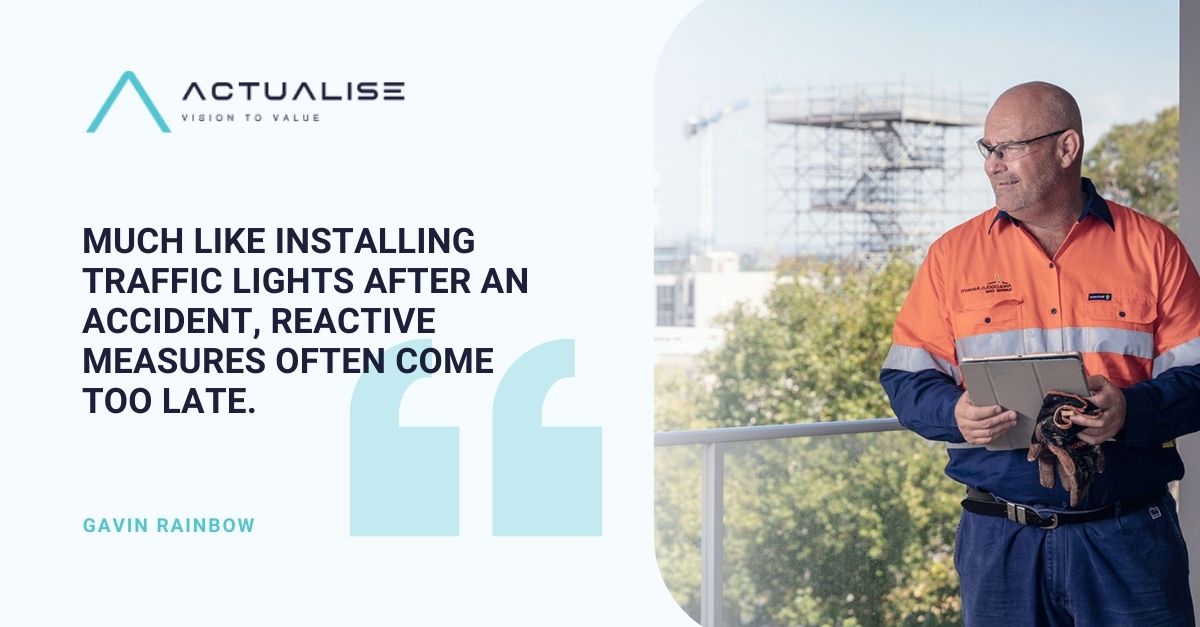
Safety must be woven into the very fabric of the workplace culture. It’s not just a checklist or a policy; it’s an ongoing conversation. Leaders must prioritise safety before an incident occurs, not after. Like the example of installing traffic lights after an accident, reactive measures often come too late. Leaders who embrace safety as a core value, rather than a response to crises, build trust and a culture of prevention.
“A true leader doesn’t wait for a crisis to talk about safety. They stand up every day and say, ‘Safety matters, and it matters today.’ Once an incident happens, it’s too late to prove you care, you have to react. The real test of leadership is whether you cared enough to act before it became a problem.” says Braden.
When safety becomes intrinsic to a company’s culture, it doesn’t just prevent accidents—it fosters a sense of trust and responsibility, improving employee morale, reducing costs related to injuries, and protecting the company’s reputation through operational excellence. For leaders, this isn’t just a compliance issue—it’s a vital investment in long-term success. It’s an ongoing dialogue that the leader must engage all team members in, and lead the conversation.
In the end, safety isn’t just about policies or regulations; it’s about leadership that lives and breathes safety every day. Leaders must prioritise it early and often, ensuring that their teams understand its importance before accidents happen. Only then can true safety culture take root, and only then can businesses thrive in environments where risks – of all types – are ever-present.
How would you describe the safety culture of your organisation? Talk to Gavin about how to develop your leaders in this field.